
Bench Warrants in Morgan County
A bench warrant is a judge's tool for enforcing a duty inside a case that already exists. Morgan County records tend to use two labels for it: "bench warrant" and "failure-to-appear warrant." The triggers are familiar ones. A missed hearing counts. So does a skipped criminal setting, an unmet court order, or a traffic fine left alone until it ripens into a failure to appear. You may run across "capias" elsewhere, but official Morgan County pages lean on the other terms. Where you start depends entirely on the underlying case. A felony setting sits with the Superior Court of the Ocmulgee Judicial Circuit. County traffic matters land in Probate Court, while Madison city traffic and ordinance cases belong to Madison Municipal Court. A public case entry can help you trace a docket. It is not, however, a live statewide warrant check, because Georgia offers no single public warrant database.
Morgan County Bench Warrant Rules
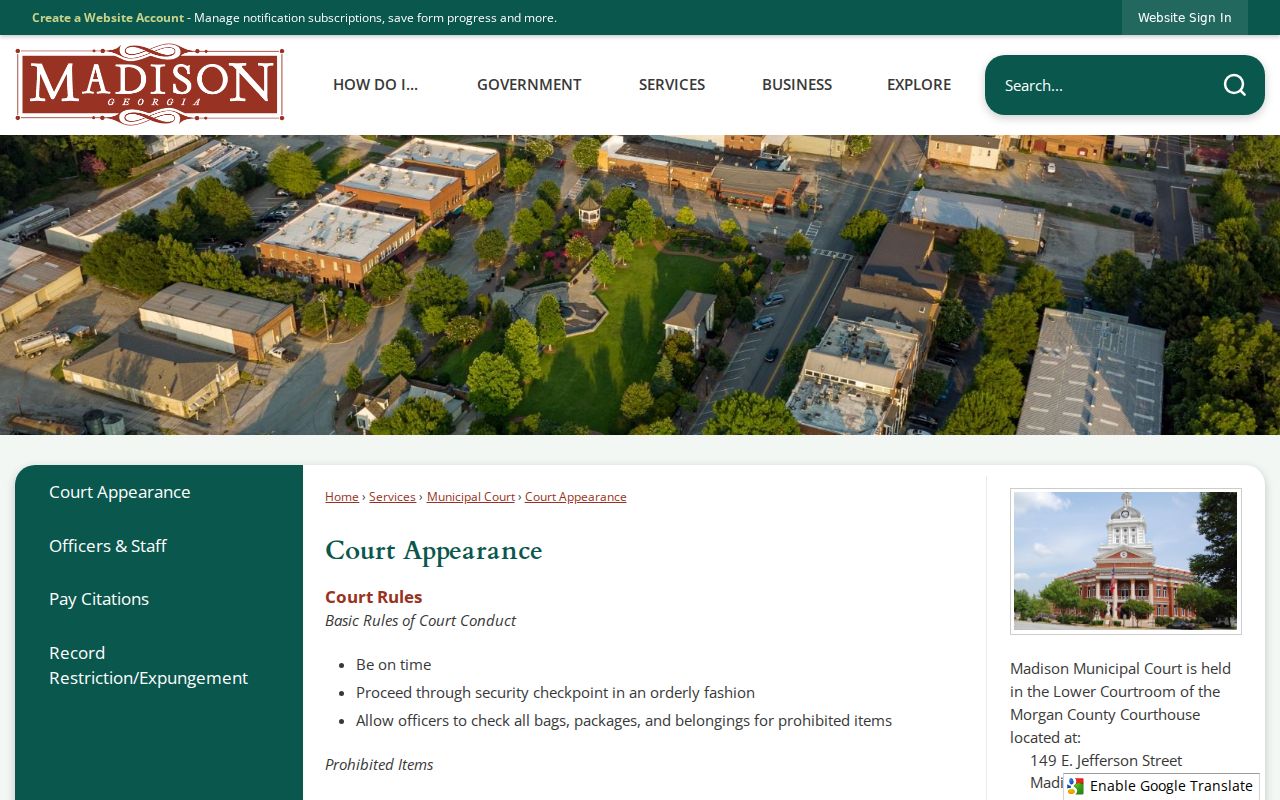
Madison Municipal Court's appearance rules lay out the clearest local account of how a missed date becomes a bench warrant. Once a failure to appear is on record and notice went to the last address you gave, a standing order directs the court to issue the warrant. Bond forfeiture follows. An added failure-to-appear fee does too. That is why current contact details matter so much in Morgan County. If you moved and never told the court, do not assume your case stalled. Madison also states that FTA warrants issue on must-appear offenses, driving without a valid Georgia license, and ordinance violations. Other minor traffic matters may instead move through the DS-912 license-suspension process. The court's own appearance page carries those rules and the fee details.
The clerk still must confirm live status and any judge-approved reset.
How a Bench Warrant Is Issued
The judge acts inside a case already on the docket. When a required setting or condition goes unmet, the court records the failure. It may then direct that a warrant issue. The clerk keeps the docket, and the issuing judge alone controls recall, a reset, or other relief. Morgan County Sheriff Administration processes warrants from the county's principal courts, while city police handle city-court matters.
The local path is: required event → failure to appear or comply → judicial order → clerk record → warrant processing and service → return to court. Sheriff staff may confirm processing or custody questions. They cannot replace the judge's recall decision.
Note: Morgan County publishes no standard warning period, recall form, walk-in docket, or same-day-release guarantee for bench warrants.
Morgan Traffic FTA Sequence
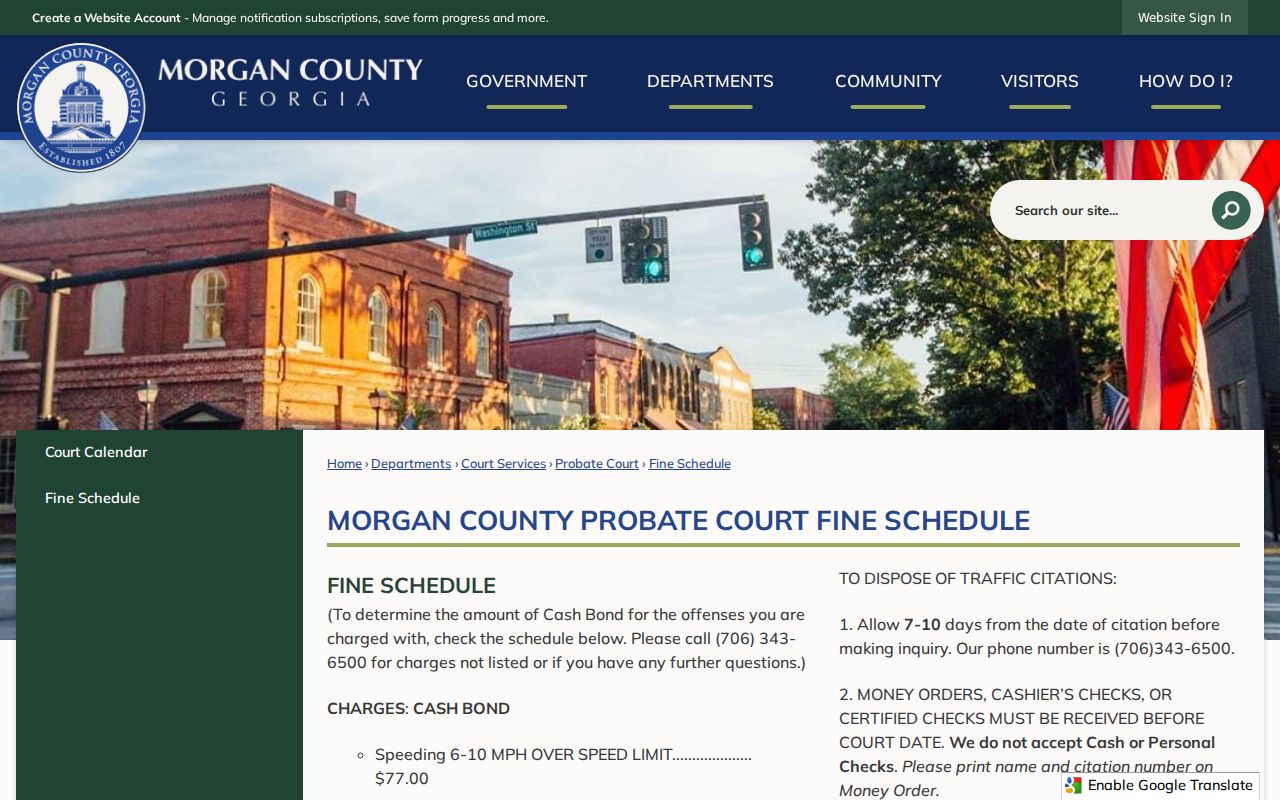
Morgan County Probate Court is a good illustration of why a citation and a warrant are not the same record. Its traffic cash-bond schedule tells drivers to allow seven to ten days after a citation before asking about it. A payable matter can often be settled before court through approved methods. Let the date pass, though, and the court warns of a $70 added cost, DDS suspension, and/or a bench warrant. A new citation may not be posted yet. A late one may no longer be payable online. A DDS notice is administrative only, not proof the warrant was recalled. Ask Probate Court directly whether the court duty, the warrant, and the DDS release have each been addressed.
It is not a general criminal-warrant bond schedule.
Bench Warrant vs Arrest Warrant
Either order can put a person in custody. The difference is how each one starts. A Morgan County bench warrant enforces a duty in an existing case, while an arrest warrant rests on probable cause that a person committed an offense.
| Feature | Bench Warrant | Arrest Warrant |
|---|---|---|
| Trigger | Missed date or failure to comply | Sworn facts supporting probable cause |
| Case posture | Usually an existing matter | May begin a criminal case |
| Judicial action | Judge acts in pending case | Judge reviews sworn information |
| Next step | Ask about recall, reset, and bond | Ask about counsel, surrender, and first appearance |
For the probable-cause route, see Morgan County arrest warrants. Neither order counts as cleared until the responsible court or sheriff confirms it.
Morgan Bench Warrant Terms
Local pages attach distinct terms to connected events. Reading each in context keeps a citation status, a DDS action, and a court warrant from blurring together in Morgan County.
- FTA
- Failure to appear or respond as required.
- Bench warrant
- A judge's arrest order tied to an existing court duty.
- Bond forfeiture
- Court action against bond after nonappearance.
- Recall
- The issuing court withdraws its warrant.
- DS-912
- The Georgia traffic-court and DDS FTA transaction.
Morgan County publishes no warrant-status code legend, so confirm "active," "served," "recalled," or "quashed" with the clerk.
How to Resolve a Morgan County Bench Warrant
Start with the issuing court, since its judge controls the warrant. Sheriff Administration can confirm processing and explain custody routing. Morgan County posts no single recall form, surrender schedule, or same-day-release rule.
- Call Sheriff Administration and the likely clerk with name, birth date, case or citation number, and missed date.
- Ask whether the Morgan County bench warrant is active and whether counsel may seek recall or a new setting.
- If surrender is directed, confirm place, identification, booking, first appearance, and bond method.
- Complete the approved step, attend the reset date, and keep the order, receipt, and any DDS release.
- Recheck the court and sheriff, and ask for written proof of status.
Caution: Do not ignore a Morgan County bench warrant or trust an unofficial payment demand; verify every instruction with the court and sheriff.
Recheck Morgan County Bench Warrants
Paying a fine, posting bond, appearing, and getting a warrant recalled are separate events, not one chain. After a recall, ask the clerk when the change goes to Sheriff Administration. If a traffic license action is involved, ask whether the court sent the release to DDS electronically. Keep every record. A receipt proves payment. An entered order proves the court acted, a DDS release addresses suspension, and sheriff confirmation covers local processing. None of them stands in for another, since court disposition and DDS processing remain separate. Note: "Cleared" should mean the authorized office reports the Morgan County warrant served, recalled, quashed, or otherwise closed, not merely that it stopped showing online.
Which Morgan County Court Issued It
The Superior Court clerk's case-search page can trace a felony docket in Morgan County. Lower-court warrants may not appear there, because each court keeps its own files.
Superior Court
Felony cases. 384 Hancock Street. (706) 342-3605.
Probate Court
County traffic cases. 149 East Jefferson Street. (706) 343-6500.
Madison Municipal Court
City cases. (706) 752-7942.
Sheriff Administration
Warrant processing. (706) 342-1507.
Magistrate handles arrest and search warrants plus bond hearings. Rutledge routes municipal questions through City Hall, while Bostwick and Buckhead use county-provided court service.
Morgan County Bench Warrant Access
If you want records the sheriff holds, Morgan County routes document requests through its Open Records form. Georgia's Open Records Act leans toward disclosure. Still, sealed cases, juvenile files, and protected investigative material can be withheld or redacted. Filing a request will not recall a warrant. It will not run a statewide search either. Give Morgan County enough detail to find the record: the court, the case or citation number, a date range, and the document you want. A narrow ask beats a blanket demand for everything tied to a name. Costs for search, retrieval, and copying may be charged under Georgia law, and withheld material must come with its legal basis. For current status, call. An open-records response is document access, not a live clearance check. Court records belong with the issuing clerk. Processing status sits with Sheriff Administration. Walk-ins about a Morgan County warrant can end in immediate custody, so talk to counsel before appearing in person.