
Arrest Warrants in Morgan County
Every arrest warrant in Morgan County rests on probable cause: enough sworn fact for a judge to reasonably believe a crime occurred and that a named person is tied to it. Under O.C.G.A. § 17-4-40, that finding can come from a Superior, city, state, or Magistrate Court judge, or from a municipal officer with magistrate powers, acting on knowledge or information given under oath. Locally the work is divided. Morgan County Magistrate Court lists arrest and search warrants among its express duties, while the Superior Court of the Ocmulgee Judicial Circuit holds felony jurisdiction, with Clerk Jody M. Higdon's office keeping those criminal files. Probate Court also handles warrant issuance and commitment hearings, and municipal judges act inside city limits. The source of the warrant and the underlying case determine which office holds the record.
Morgan Magistrate Probable Cause
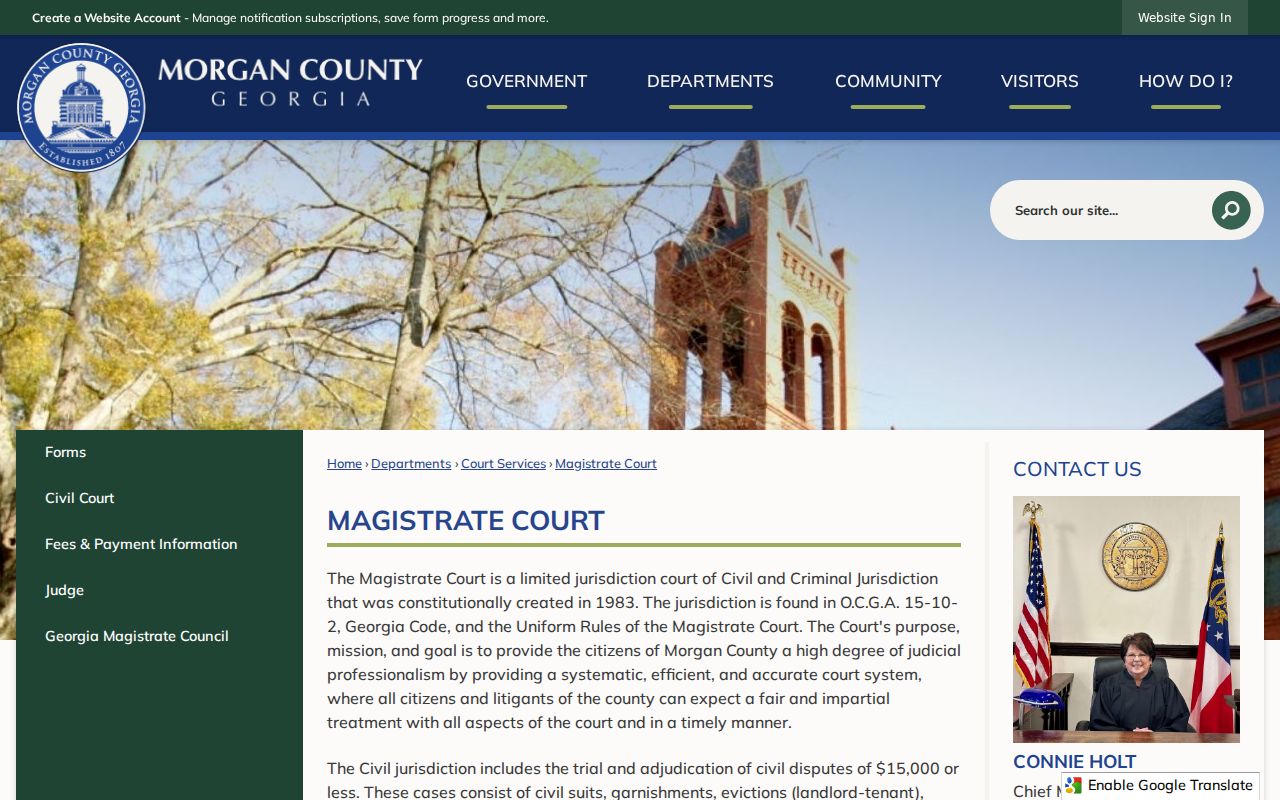
The Morgan County Magistrate Court sits at the center of local warrant work. Its criminal docket covers pre-warrant proceedings, arrest and search warrants, first appearances, bond hearings, and preliminary hearings. Those stages are distinct. A sworn request comes before any warrant issues; first appearance and bond come after custody or service.
Want to know if a Morgan County warrant stands against someone right now? Phone the clerk at (706) 342-3088, or try Sheriff Administration at (706) 342-1507. Have a full name, date of birth, and any case details ready before you dial. One caution: walking in to ask can end with a person taken into custody on the spot.
What a Morgan County Arrest Warrant Contains
Morgan County publishes no public legend or sample warrant record. Still, a releasable entry typically carries the issuing court, the subject's name and description, the alleged offense, and the date issued. Sealed, juvenile, or pending-investigation matters narrow that view. The exact contents vary case by case.
| Identifier | Case or warrant number, such as a court docket reference |
|---|---|
| Authority | Issuing court, judge, or magistrate |
| Basis | Offense, Georgia Code section, and felony or misdemeanor class |
| Timing | Issue date and later execution or return event |
| Conditions | Bond or appearance terms, when public and set |
| Status | Service, recall, quash, return, or other court action |
The Morgan County clerk's case system can pull up docket entries and filings. Treat it as a court record tool, though, not a live warrant database.
Sworn Morgan Warrant Information
A sworn complaint or affidavit backs the request for an arrest warrant. A judicial officer then weighs whether it establishes probable cause. Georgia law also lays out a hearing path when the applicant is not a peace officer. That path includes notice, evidence, and cross-examination before a probable-cause ruling. In Morgan County, the route turns on who applies and the alleged offense.
- Complaint or affidavit
- Sworn facts submitted in support of the request.
- Probable cause
- A reasonable factual basis for believing the offense occurred and the person is connected to it.
- Issuing court
- The court that authorizes the warrant and later controls recall or disposition.
- Sealed warrant
- A warrant withheld from ordinary public access by law or court order.
A blank result does not prove no warrant exists. Confirm with the Morgan County court and sheriff, not an unofficial service.
How Morgan County Arrest Warrants Are Served
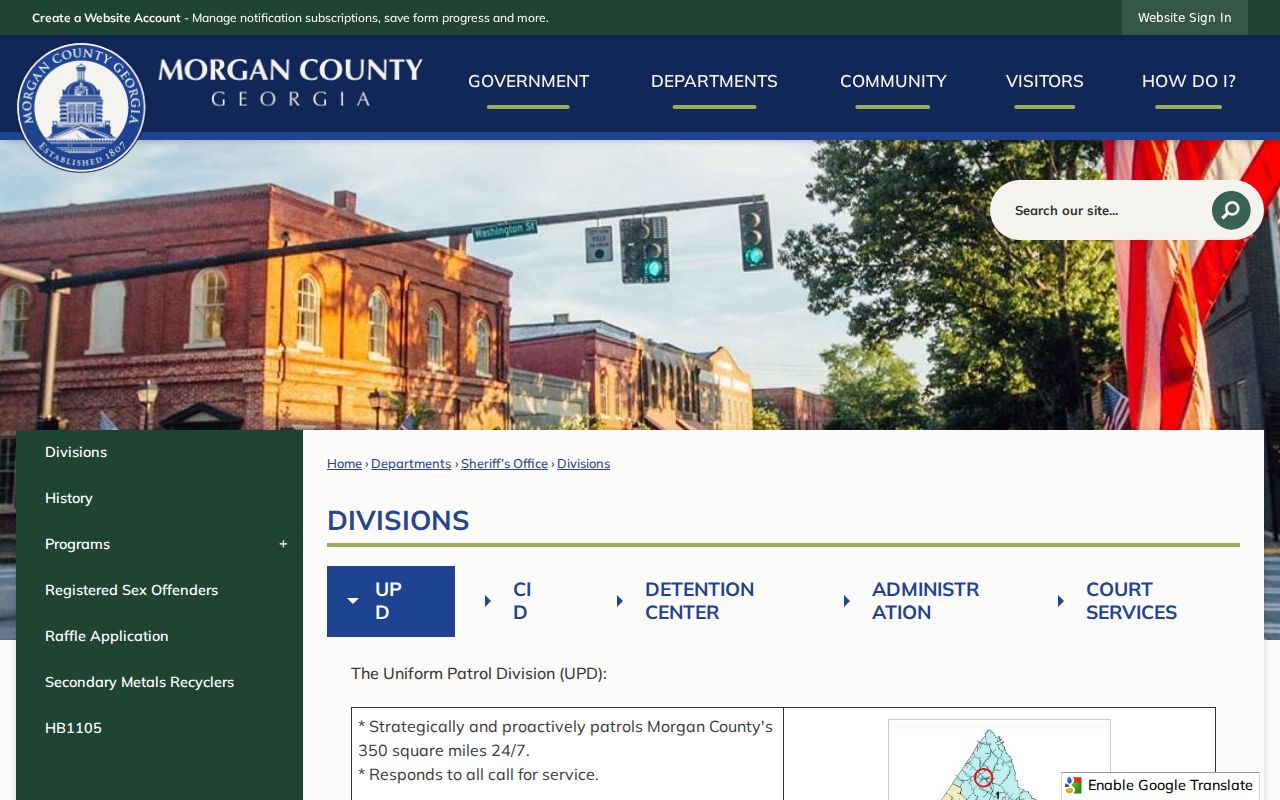
Issuing a warrant and serving it are separate jobs. The court decides; the sheriff executes. Per the Sheriff's divisions page, Administration processes warrants from three county courts, Uniform Patrol executes court orders, and Detention holds custody. Madison Police handle city matters tied to Madison Municipal Court. Morgan County has no separate constable or city-marshal warrant channel.
The basic flow is sworn facts → judicial review → warrant order → clerk record → Sheriff Administration processing → service → booking → first appearance and bond. The issuing court then manages later hearings, recall, plea, trial, or disposition.
Morgan Sheriff Service Roles
One call rarely answers everything in Morgan County. Administration, Patrol, Detention, and the clerk each hold a different piece of the warrant process.
| Office | Documented role | Best question |
|---|---|---|
| Court clerk | Docket and court documents | Which court issued it and what date is set? |
| Sheriff Administration | Processes county-court warrants | Is the order in local processing? |
| Patrol | Executes court orders | Ask Administration about service routing |
| Detention | Custody and jail intake | Where is a person held and how is bond handled? |
Reach the Morgan County Sheriff at (706) 342-1507 for administration and (706) 342-2164 for the jail. Neither line replaces legal advice or a judge's ruling.
Arrest Warrant vs Summons vs Bench Warrant
Three labels, three different jobs. In Morgan County, an arrest warrant authorizes custody on probable cause, while a summons simply tells a person to appear and carries no arrest power of its own. A bench warrant is different again, issued when someone misses a duty in a case already underway.
| Process | Why it starts | Immediate effect |
|---|---|---|
| Arrest warrant | Probable cause on sworn information | Authorizes arrest |
| Summons | Court directs an appearance | Requires response by the stated terms |
| Bench warrant | Missed appearance or court violation | Authorizes arrest and return to the case |
One Morgan County docket can hold several of these entries at once. Ask the clerk which document still controls and when the next court event falls.
Morgan Arrest Warrant Public Access
The Morgan County Open Records form is one route to an existing, releasable sheriff record. The Georgia Open Records Act leans toward access. Still, O.C.G.A. § 50-18-72 lets agencies withhold or redact protected investigative material. Juvenile records sit under separate confidentiality rules. A sealed indictment is also not the same thing as a public arrest-warrant listing. For Superior Court records, start with the clerk's case-search landing page or call the office at (706) 342-3605. A Magistrate warrant question goes to that clerk instead. The Sheriff page posts no complete public warrant list. Georgia has no public statewide warrant index either, so direct confirmation matters. Note: A public-record response can be incomplete for lawful reasons and is not proof that no Morgan County arrest warrant exists.
What to Do If There's a Warrant for You
Learn the likely process before you show up. A lawyer can ask Morgan County about a walk-through, a surrender plan, a bond arrangement, or a motion. The county publishes no universal surrender hours, no general warrant bond schedule, and no promise of same-day release. Bond gets you out when authorized, but it does not end the case.
- Confirm the issuing court and warrant type with Sheriff Administration and the clerk.
- Ask counsel whether to arrange surrender, seek court action, or prepare for a first appearance.
- If directed to surrender, confirm location, identification, booking, magistrate timing, and approved bond method.
- Keep the warrant or case number, bond papers, court dates, and all later orders.
- Recheck the court and sheriff after recall, service, or disposition.
Important: A Morgan County arrest warrant can lead to custody; get direct instructions from counsel, the issuing court, and the sheriff before appearing.
Morgan County Arrest Warrant Contacts
Match the office to the stage of your case. The Morgan County Sheriff's Office, at 1380 Monticello Road, confirms warrants and handles processing. Magistrate Court sits at 149 East Jefferson Street. The Superior Court clerk is at 384 Hancock Street, and Probate Court keeps its own warrant and traffic records.
Sheriff Administration
(706) 342-1507 for local warrant-processing questions.
County Jail
(706) 342-2164 for custody and intake questions.
Magistrate Court
(706) 342-3088 for its warrant and hearing records.
Superior Court Clerk
(706) 342-3605 for felony docket records.
Only the Morgan County courts can recall or quash a warrant. The sheriff answers questions about processing and custody. Keep those roles straight when you call.